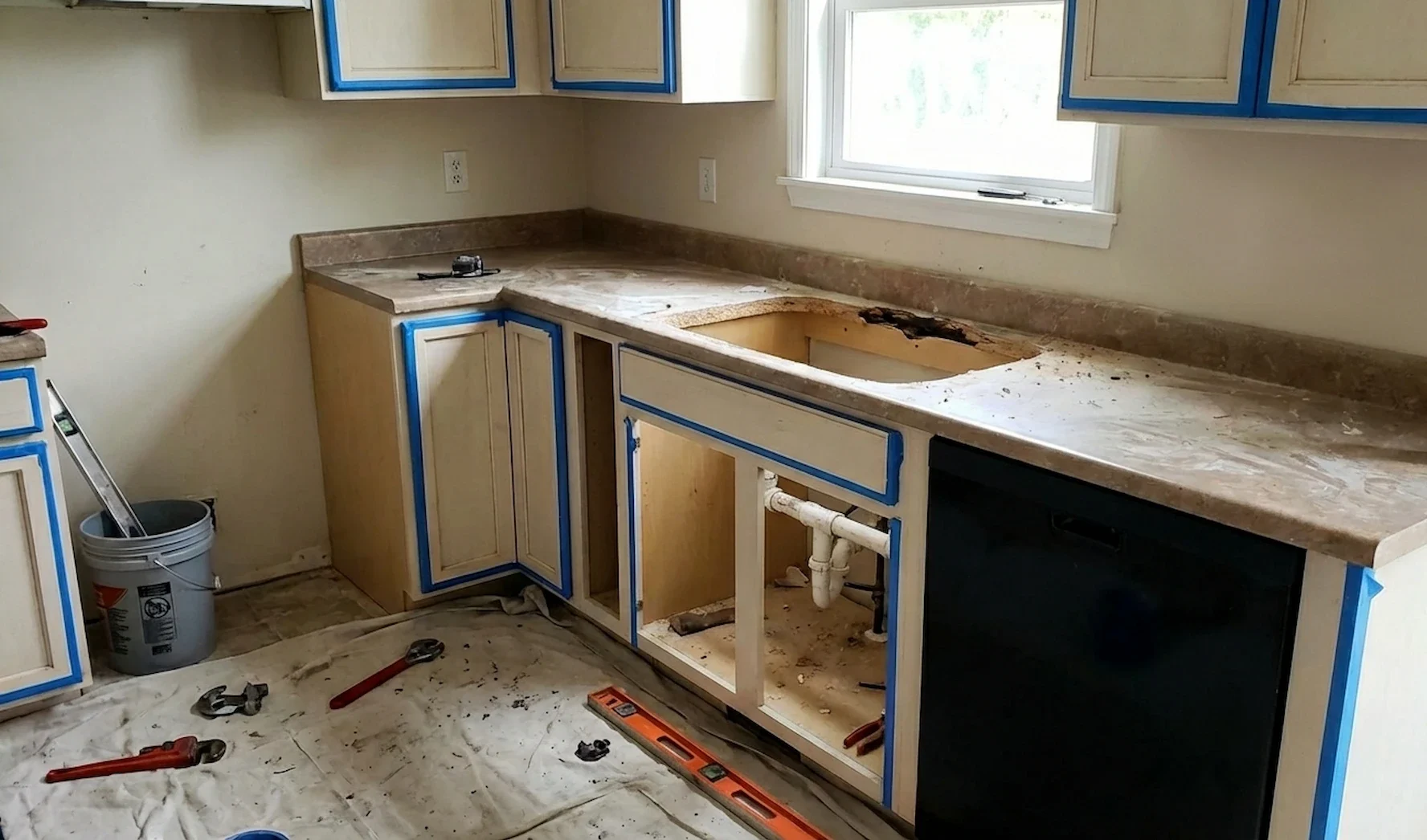
Question: How To Prep for Kitchen Sink Replacement?
Answer: To prep for kitchen sink replacement, first shut off the water supply. Clear the cabinet below and place a bucket to catch water. Disconnect the supply lines and drain trap. Then, loosen the clips or cut the sealant securing the old sink to the countertop.
Getting Ready for Your New Kitchen Sink
Replacing a kitchen sink is a valuable home improvement project. Proper preparation is the most important part of the process. Good prep work ensures your kitchen sink replacement project goes smoothly. It helps you avoid common installation issues, unexpected costs, and frustrating delays. Before you can enjoy your new fixture, you must complete several key steps. These steps create a clean and ready workspace for the installation.
This article outlines the essential prep work for a sink replacement. We will cover everything from taking precise measurements to gathering the correct tools. You will also learn how to clear the under-sink cabinet and safely disconnect the old plumbing. Following these instructions will prepare you for a successful installation. This preparation is important whether you plan a DIY project or hire a professional plumber. A well-prepared space makes the final installation faster and more efficient for everyone involved.
Taking the time to prepare correctly helps you confirm your new sink will fit perfectly. It also protects your cabinets and countertops from damage during the removal and installation. You can identify potential plumbing problems early and address them before they become bigger issues. A systematic approach to preparation transforms a difficult job into a manageable task. Your careful planning will pay off with a beautiful and functional new kitchen sink.
Measure Your Space and Choose the Right Sink
The first step in your kitchen sink replacement prep is to measure everything accurately. Use a tape measure to determine the length and width of your current sink. You should also measure the depth of the sink bowl. Record these dimensions carefully. Next, measure the countertop cutout. For a top-mount sink, measure the opening from underneath the counter. For an undermount sink, measure the inside dimensions of the sink itself, as it is the opening.
You must also measure the interior of your base cabinet. Check the width, depth, and height to ensure the new sink, especially a deeper model, will fit. Pay close attention to the location of plumbing pipes and the garbage disposal. These elements can limit the available space for the new sink bowl. Accurate measurements prevent you from buying a sink that does not fit your existing countertop or cabinet. This simple action saves you from a very costly mistake.
With your measurements, you can select a new sink. Sinks come in various types, including top-mount, undermount, and farmhouse styles. A top-mount, or drop-in, sink is the easiest to install and fits over the countertop opening. An undermount sink provides a seamless look but requires a waterproof countertop material like granite or quartz. A farmhouse sink may need custom cabinet modifications. Consider the material as well. Stainless steel is durable and affordable, while cast iron is heavy but very resilient. Composite granite offers modern colours and excellent scratch resistance. Your choice will define the look and function of your kitchen workspace.
Click here for more information on a kitchen cabinet refinishing service in Toronto
Related Article: Why Do Undermount Kitchen Sinks Fall?
Related Article: What To Look For When Buying a Kitchen Sink?
Clear and Prepare the Under-Sink Area
Your next step is to prepare the physical workspace. Start by completely emptying the cabinet underneath your kitchen sink. Remove all cleaning supplies, storage containers, and any other items. This gives you a clear and open area to work in. It also protects your belongings from water damage during the disconnection process. Once the cabinet is empty, clean it thoroughly. Wipe down the cabinet floor and walls to remove any dirt, grime, or old spills.
A clean workspace is safer and makes it easier to see what you are doing. You can easily spot leaks or other issues in a clean environment. After cleaning, place a bucket directly under the P-trap and the water supply lines. Lay down several old towels on the cabinet floor to absorb any water that might spill. This simple precaution will protect your cabinetry from water damage and keep your work area dry.
Before you disconnect any plumbing, you must shut off the water supply to the sink. Locate the two shutoff valves under the sink, one for hot water and one for cold. Turn the handles clockwise until they are fully closed. If your sink does not have local shutoff valves, you will need to turn off the main water supply to your house. After closing the valves, turn on the faucet to release any remaining pressure and drain the water from the lines.
Disconnect the Plumbing and Faucet
With the water off and the area prepared, you can begin disconnecting the plumbing. Start with the two water supply lines. Use an adjustable wrench to loosen the nuts connecting the lines to the shutoff valves. You may need a second wrench to hold the valve steady to prevent it from turning. Have your towels and bucket ready, as a small amount of water will drain from the lines.
Next, focus on the drain plumbing. The P-trap is the curved section of pipe directly beneath the sink drain. It usually has large slip nuts that you can loosen by hand or with channel-lock pliers. Position your bucket underneath the trap before you loosen the nuts, as it is filled with water. Disconnect the trap from both the sink’s tailpiece and the drainpipe extending from the wall.
If you have a garbage disposal, you must remove it before the sink. First, unplug the disposal from the electrical outlet under the sink. If it is hardwired, turn off the corresponding circuit breaker. To detach the unit, insert a disposal wrench or a large screwdriver into the lower mounting ring and twist it. The disposal is heavy, so support it with one hand as you twist it off the mounting bracket. Finally, use a basin wrench to loosen and remove the nuts securing the faucet to the old sink.
Remove the Old Kitchen Sink
The final step in your prep work is to remove the old sink from the countertop. The method depends on whether you have a top-mount or an undermount sink. For a top-mount sink, you must first release the mounting clips located under the counter along the sink’s perimeter. Use a screwdriver or a nut driver to loosen each clip until it can be turned away from the countertop. There are typically between four and ten clips holding the sink in place.
Once you have released all the clips, the only thing holding the sink is the seal of caulk or putty. Use a utility knife to carefully cut through the sealant between the sink’s outer rim and the countertop. Be careful not to scratch the countertop surface. After you break the seal, push up on the sink from below. It may require some gentle force to free it. Ask for help to lift the sink out, especially if it is a heavy cast iron or fireclay model.
For an undermount sink, the process is slightly different. The clips securing an undermount sink press it up against the bottom of the counter. Support the sink from below with a piece of wood across the cabinet opening before you loosen the clips. After removing the clips, carefully cut the silicone adhesive bead between the sink rim and the counter. The sink will then be free to lower down and out of the cabinet. After removing the old sink, thoroughly clean the countertop. Use a putty knife to scrape away any old putty or silicone and a mild solvent to remove any residue.
Final Preparations Before Installing Your New Sink
You have now completed all the essential prep for your kitchen sink replacement. By systematically measuring your space, gathering your tools, clearing the cabinet, and removing the old fixture, you have built a solid foundation for the next phase. This diligent preparation is the key to a successful and stress-free installation. Your clean and ready workspace minimizes the chance of errors and ensures your new sink will fit perfectly into place. This is your last chance to check the countertop opening and make any minor adjustments needed for a perfect fit.
Before you begin the installation, take a moment to inspect your new sink carefully. Unbox it and check for any cracks, chips, or other defects that may have occurred during shipping. It is far easier to address these issues with the manufacturer or retailer before the sink is installed with plumbing and adhesive. Compare the new sink to your measurements one last time to confirm it is the correct size for your countertop cutout and cabinet.
With all your preparation complete, you are now ready to install your new kitchen sink. The most challenging part of the project is behind you. Remember to read the manufacturer’s installation instructions that came with your specific sink model. These directions provide important details about mounting clips, sealant application, and other model-specific requirements. Your careful prep work has set the stage for a smooth installation and a beautiful, functional upgrade for your kitchen.

Blue Malue Get in touch with Blue here.