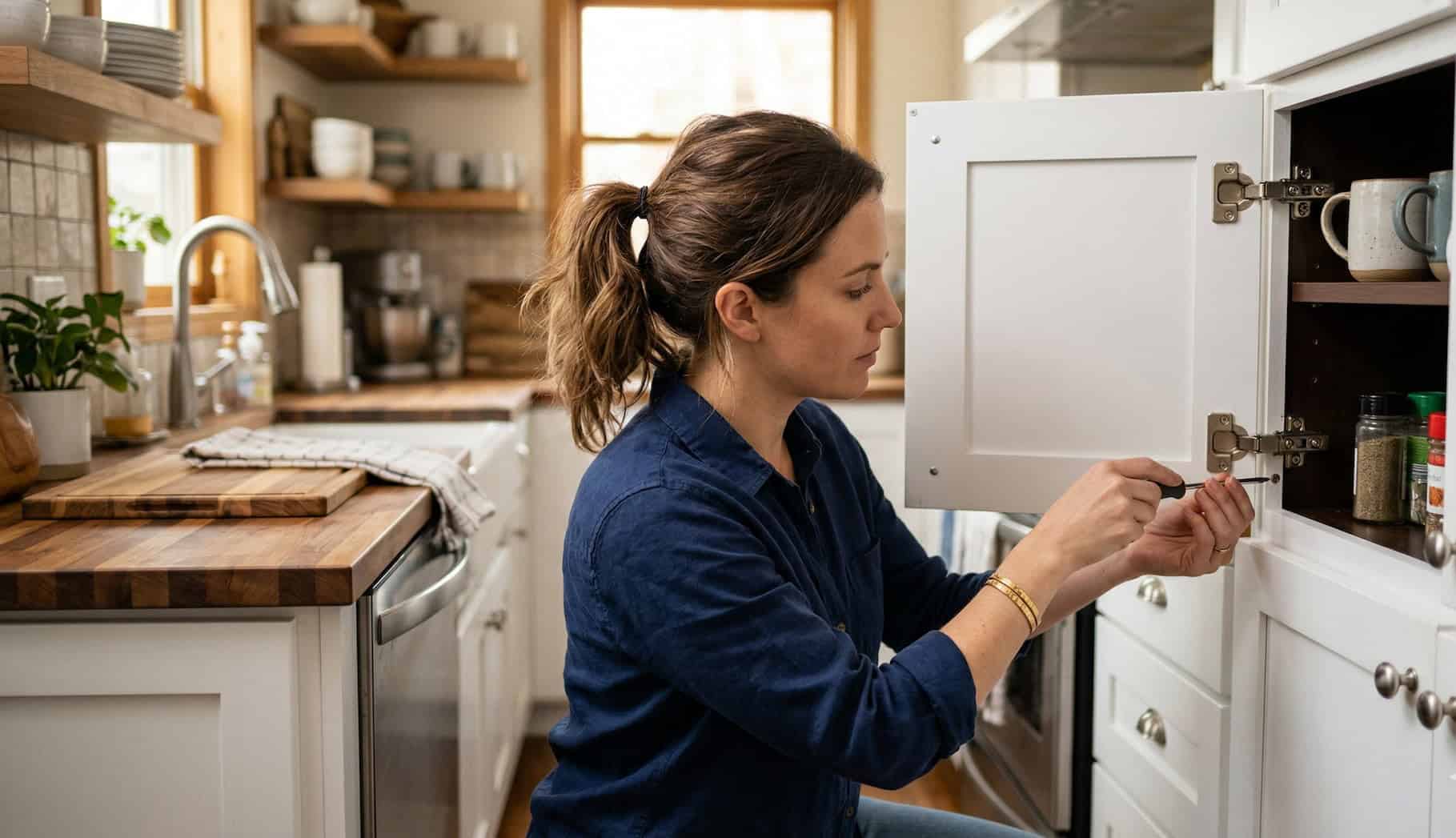
Question: How Do You Fix a Kitchen Cabinet Door That Won’t Stay Closed?
Answer: To fix a kitchen cabinet door that won’t stay close first, check for obstructions. If clear, adjust the hinge screws to realign the door. If the problem persists, the magnetic or roller catch may be weak or misaligned and might need adjustment or replacement.
Effective Ways to Repair a Kitchen Cabinet Door That Swings Open
A kitchen cabinet door that refuses to stay closed is a common household frustration. It disrupts the clean lines of your kitchen, presents a potential hazard, and creates a constant, nagging annoyance. You close it, walk away, and moments later, it has drifted open again. This issue often seems to appear without warning, leaving you wondering about the cause. Many homeowners immediately assume they need to replace expensive hardware or call a professional for a costly repair. However, the solution is usually much simpler and well within the reach of a DIY-minded person with a few basic tools.
The problem rarely stems from a single, complex failure. Instead, it typically points to a minor issue with the cabinet’s hardware or alignment. Gravity, daily use, and even subtle changes in your home’s structure can cause screws to loosen or hinges to shift slightly over time. Overstuffed cabinets can also place constant pressure on the door, preventing it from closing properly. Understanding the root cause is the first step toward a lasting solution.
What Causes a Cabinet Door to Swing Open?
Before you can fix a disobedient cabinet door, you need to understand why it is misbehaving. The most frequent culprit is the cabinet hinge. Modern hinges are designed for precise alignment, but daily wear can cause their screws to loosen. When the screws holding the hinge to the cabinet frame or the door become loose, the door will sag and pull away from the frame, preventing it from closing correctly. The internal mechanism of the hinge itself can also wear out over many years of use, losing the tension required to hold the door shut.
Another common cause relates to the cabinet box itself. If the cabinet was not installed perfectly level and plumb, the door will naturally want to swing open due to gravity. Your house settling over time can also introduce slight shifts that throw a previously perfect installation out of alignment. Additionally, do not overlook the simple issue of obstructions. Items stored inside the cabinet may shift and block the door from closing all the way. A pot handle, a tall cereal box, or a stack of plates might be the only thing standing between you and a tidy-looking kitchen.
Click here for more information on this page
Related Article: What Should You Do If Your Cabinet Hinges Start Squeaking?
Related Article: Is Cabinet Rot Preventable in High-Moisture Climates?
Step-by-Step: Adjusting Cabinet Hinges for a Secure Close
Adjusting the cabinet hinges is the most effective solution for a door that will not stay closed. Most modern kitchen cabinets use European-style concealed hinges, which offer several points of adjustment. These allow you to move the door up, down, left, right, in, and out. Start with the simplest fix first and progress to more detailed adjustments if needed. Often, a small turn of the right screw is all it takes to resolve the problem completely. This process requires a bit of patience, so make small adjustments and check the door’s alignment after each one.
Check for Loose Screws
Your first action should be to check all visible screws on both hinges. There are screws that attach the hinge plate to the cabinet frame and screws that attach the hinge arm to the door. Use your Phillips head screwdriver to gently tighten each one. Be careful not to overtighten them, as this can strip the wood and create a bigger problem. If a screw turns continuously without tightening, the hole is stripped. You will need to address that specific issue using the toothpick and glue method, which we will cover next. In many cases, simply tightening these mounting screws will re-align the door and allow it to close securely.
Adjust Hinge Alignment
If tightening the screws did not solve the problem, you will need to adjust the hinge settings. Look closely at your hinge. You should see two or more screws dedicated to alignment. One screw, usually the one closest to the front, moves the door left or right. Turning it clockwise typically moves the door closer to the hinge side. Another screw, often in an oblong hole, adjusts the door’s depth, moving it closer to or farther from the cabinet frame. A third adjustment, sometimes on the mounting plate itself, controls the vertical height. Adjust one screw a quarter-turn at a time, then close the door to check your progress. This methodical approach will help you achieve a perfect fit.
Dealing with Stripped Screw Holes
A stripped screw hole prevents the hinge from anchoring securely, causing the door to sag. To fix this, remove the screw and hinge completely. Fill the hole with wooden toothpicks or a piece of a wooden golf tee coated in a small amount of wood glue. Break the toothpicks off so they are flush with the cabinet surface. Allow the glue to dry completely according to the manufacturer’s instructions. Once dry, the new wood provides a solid base for the screw. You can now reinstall the hinge, and the screw will bite firmly into the repaired hole, holding the door securely in place.
How Do You Fix a Kitchen Cabinet Door That Won’t Stay Closed with Hardware Solutions?
Sometimes, hinge adjustments are not enough to solve the problem, especially with older cabinets or severely worn hardware. When you need a more definitive solution, adding or replacing hardware is an excellent and reliable option. These fixes provide a physical mechanism to hold the door shut, bypassing any issues related to hinge tension or slight misalignments. They are also inexpensive and relatively easy to install for most people. Answering the question of how do you fix a kitchen cabinet door that won’t stay closed often involves one of these simple hardware additions.
One of the most popular and effective solutions is installing a magnetic catch. This device consists of a small magnet housed in plastic or metal that attaches to the cabinet frame and a small metal plate that attaches to the inside of the door. When the door closes, the magnet grabs the plate and holds it firmly shut. To install one, simply screw the magnet onto the inside of the cabinet frame near the top corner and attach the corresponding plate to the door so they align perfectly. Roller catches work in a similar way but use two small rollers that snap into a two-pronged clip, offering another strong hold.
Addressing Issues with the Cabinet Frame and Door
If you have tightened and adjusted the hinges and the door still swings open, the problem might lie with the door or the cabinet box. Wood is a natural material that can react to changes in its environment, particularly humidity. High humidity can cause a cabinet door to swell or warp, preventing it from sitting flat against the cabinet frame. You can check for a warp by removing the door and placing a straightedge across its surface. A minor warp may correct itself as humidity levels change, but a severe one might mean the door needs to be replaced.
The cabinet box itself can also be the source of the trouble. Use a level to check if the cabinet is installed correctly. Place the level along the top, bottom, and front edges of the frame. If the cabinet is leaning forward, gravity will constantly pull the door open. Levelling a cabinet is a more involved job that may require you to add shims between the cabinet and the wall, but it is the only way to permanently fix an alignment issue caused by a poor installation. Finally, perform one last check for any obstructions inside the cabinet that you may have missed earlier.
Preventing Future Cabinet Door Problems
Once you have successfully fixed your cabinet door, a few simple habits can help prevent the issue from returning. Regular, minor maintenance is much easier than dealing with a full-blown repair. Every six months or so, take a few minutes to check the hinge screws on all your kitchen cabinets. A quick tightening with a screwdriver can stop problems before they start. This simple act counteracts the slow loosening that occurs from thousands of opening and closing cycles over the years. Taking this proactive step ensures your doors remain properly aligned and secure.
How you use your cabinets also matters. Avoid overstuffing them to the point where contents press against the door, as this places constant strain on the hinges and latching mechanism. Organise your shelves to ensure everything fits comfortably inside with adequate clearance for the door to close freely. You should also encourage family members to close cabinet doors gently instead of letting them slam shut. Slamming doors accelerates wear on the hinges, loosens screws, and can eventually lead to the same alignment issues you just worked to correct. These small changes in behaviour will significantly extend the life and performance of your cabinet hardware.
Restoring Order to Your Kitchen with a Simple Fix
A kitchen cabinet door that will not stay closed can easily disrupt the harmony and functionality of your space. What seems like a major defect is almost always a minor issue that you can resolve without professional help. By methodically inspecting the hinges, checking the alignment, and looking for obstructions, you can quickly diagnose the root of the problem. For most situations, a screwdriver is the only tool you need to tighten loose hardware or make small adjustments that bring the door back into perfect alignment. This small investment of time immediately pays off by restoring the clean, orderly appearance of your kitchen.
Even if the fix requires a bit more effort, such as repairing a stripped screw hole or installing a new magnetic catch, these tasks are straightforward for any homeowner. Now that you know how do you fix a kitchen cabinet door that won’t stay closed, you have the confidence to tackle this common annoyance head-on. Taking control of these small home repairs not only saves you money but also gives you a satisfying sense of accomplishment. You can enjoy a kitchen where every door shuts securely, stays put, and contributes to a peaceful and well-maintained home environment.

Blue Malue Get in touch with Blue here.