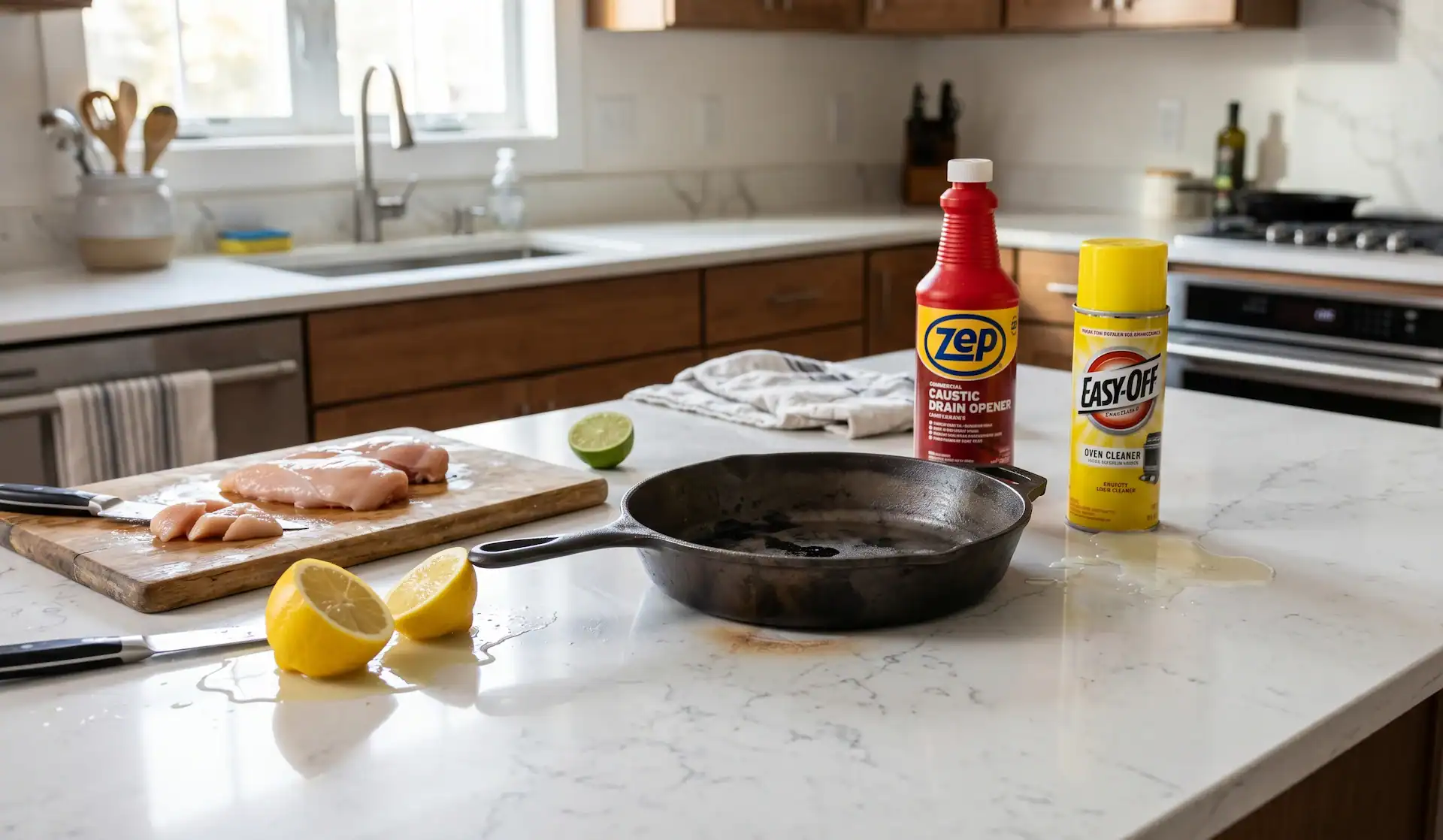
Question: What Not to Put on Quartz Countertops?
Answer: Things you should not put on quartz countertops to prevent damage include direct contact with high heat (hot pots/pans), harsh chemicals like bleach or oven cleaner, abrasive scrubbers, and sharp knives. These can cause discoloration, dull the finish, or create scratches. Always use trivets and cutting boards.
What You Should Never Place on Your Quartz Countertops
You chose quartz countertops for their stunning appearance and celebrated durability. These engineered stone surfaces offer a brilliant combination of natural beauty and modern resilience, making them a popular choice for kitchens. Homeowners appreciate their non-porous nature, which resists staining and bacterial growth far better than many natural stones. This low-maintenance appeal is a significant reason people invest in quartz for their homes. However, resilience does not mean your countertops are indestructible. Certain everyday items and common household chemicals can cause permanent damage, including discolouration, scratches, and even cracks.
Understanding the composition of your countertops is key to their proper care. Quartz surfaces consist of about 90-95% ground natural quartz crystals combined with polymer resins and pigments. The quartz provides incredible hardness and strength, while the resins bind the crystals together and create a sealed, non-porous surface. This resin is the very component that makes the countertops vulnerable to specific threats like high heat and harsh chemicals. Protecting this resin is essential to maintaining the countertop’s lustrous finish and structural integrity. Learning what not to put on quartz countertops is the most effective way to ensure they remain as beautiful as the day they were installed.
Avoid Extreme Heat to Prevent Discolouration and Cracks
One of the most critical rules for quartz countertop care is to protect the surface from high temperatures. While the natural quartz mineral is resistant to heat, the polymer resins that bind it together are not. Exposing the surface to direct heat from a hot pot, pan, or baking sheet can damage these resins. This can cause a permanent white or yellow mark, a process often called scorching. The damage is not a stain that you can clean off; it is a physical change to the material itself. In some cases, the damage might be irreversible without professional intervention.
Beyond cosmetic discolouration, sudden and extreme temperature changes can cause thermal shock. Placing a very hot object directly onto a cool countertop creates rapid expansion in one area while the rest of the surface remains contracted. This stress can lead to fine cracks or even a significant fracture in the material. To prevent both scorching and cracking, you must create a thermal barrier. Always use trivets or hot pads for items coming directly from the stove or oven. You should also place protective mats under appliances that generate heat for extended periods, such as slow cookers, electric pressure cookers, and toaster ovens. These simple habits will safeguard your investment.
Click here to read more about Blue Kitchen Refacing
Related Article: What Is the Safest Cleaner for Quartz Countertops?
Related Article: What Is the Downside to a Quartz Countertop?
Acidic and High-pH Substances
While quartz is highly resistant to staining, it is not completely immune to the effects of highly acidic or alkaline substances. Prolonged contact with these items can etch or dull the surface finish. It is important to know what not to put on quartz countertops, even for a short time, to avoid this type of damage. Common kitchen liquids like lemon juice, lime juice, vinegar, and wine are all acidic. If spills of these substances are left to sit on the surface, they can slowly break down the resin, leaving a dull spot that looks different from the rest of the countertop.
On the other end of the pH scale, highly alkaline products pose a similar threat. This category includes some aggressive degreasers and harsh cleaners not specifically formulated for engineered stone. The best practice is to wipe up any spills immediately using a soft, damp cloth. Do not let spills from cooking, food preparation, or drinks sit for hours. By cleaning messes as they happen, you prevent these substances from having enough time to react with the surface. This proactive approach is far simpler than trying to repair a dulled or etched finish later. Simple vigilance is your best defence against this subtle but permanent form of damage.
Protect Your Countertops from Sharp Objects and Heavy Impacts
Many people believe quartz is scratch-proof, but this is a common misunderstanding. Quartz is exceptionally scratch-resistant, which means it can withstand daily wear and tear better than most other materials. On the Mohs scale of mineral hardness, quartz ranks a 7, making it harder than steel. However, it is not impervious to damage. Using a sharp knife directly on the surface can still leave a scratch. This action will also severely dull your knife blades very quickly. The solution is simple and essential for any kitchen: always use a cutting board. This protects both your countertops and your kitchen knives.
The engineered nature of quartz also makes it susceptible to chipping and cracking from heavy impacts, especially along the edges and around sink cutouts. These areas are the most vulnerable points on the countertop. Dropping a heavy cast-iron skillet, a full pot, or another dense object can easily cause a chip or crack that is difficult and costly to repair. Be mindful when handling heavy cookware near the sink or the countertop’s edges. Taking a moment to set down heavy items gently rather than dropping them can prevent an accident that blemishes your beautiful surface. Careful habits are key to preserving the pristine condition of your quartz.
The Dangers of Permanent Inks and Dyes
The non-porous quality of quartz makes it excellent at repelling most common food-related stains, but some materials can still penetrate the surface. Highly pigmented substances like permanent markers, inks, and certain dyes are particularly problematic. A child’s art project with a permanent marker or a spill of fabric dye can quickly become a permanent fixture on your countertop. These substances have small pigment particles that can work their way into the microscopic spaces within the resin binder, creating a stain that is nearly impossible to remove completely with standard cleaning methods.
You should exercise caution when working with these materials anywhere near your quartz surfaces.
Permanent Markers
Always place a protective covering, like a mat or thick paper, on the counter before using permanent markers.Food Colouring
Be careful when mixing food colouring for baking, as concentrated drops can leave a vibrant stain if not wiped up instantly.Hair and Fabric Dyes
These potent dyes are designed to be permanent and can easily discolour your countertop. Avoid mixing or applying them in the kitchen or bathroom vanity area if possible.
If a spill occurs, blot it immediately with a paper towel without wiping, which can spread the stain. Then, use a cleaner approved for quartz to address the spot. However, prevention is by far the most effective strategy against these stubborn stains.
Keep Your Quartz Looking New for a Lifetime
Your quartz countertops represent a significant and beautiful investment in your home. Protecting that investment requires a clear understanding of their unique properties and simple, consistent care. The key to their longevity is not about intensive maintenance but about forming good habits and knowing which items and substances to keep away. By avoiding direct contact with high heat, you prevent ugly scorch marks and the risk of thermal shock cracks. Using only mild, pH-neutral cleaners ensures you do not inadvertently dull the finish or damage the resins that give the surface its flawless sheen. This is a fundamental part of responsible ownership.
Remembering what not to put on quartz countertops will become second nature over time. Always reaching for a cutting board protects the surface from scratches. Wiping up spills from acidic foods like citrus or wine immediately prevents etching. Being mindful of heavy pots and pans near the edges will save you from chips and cracks. These simple actions collectively preserve the countertop’s integrity and appearance. Following these guidelines ensures that your quartz surfaces will continue to be a source of pride and a functional, stunning centrepiece in your home for many years, looking just as brilliant as they did upon installation.

Blue Malue Get in touch with Blue here.