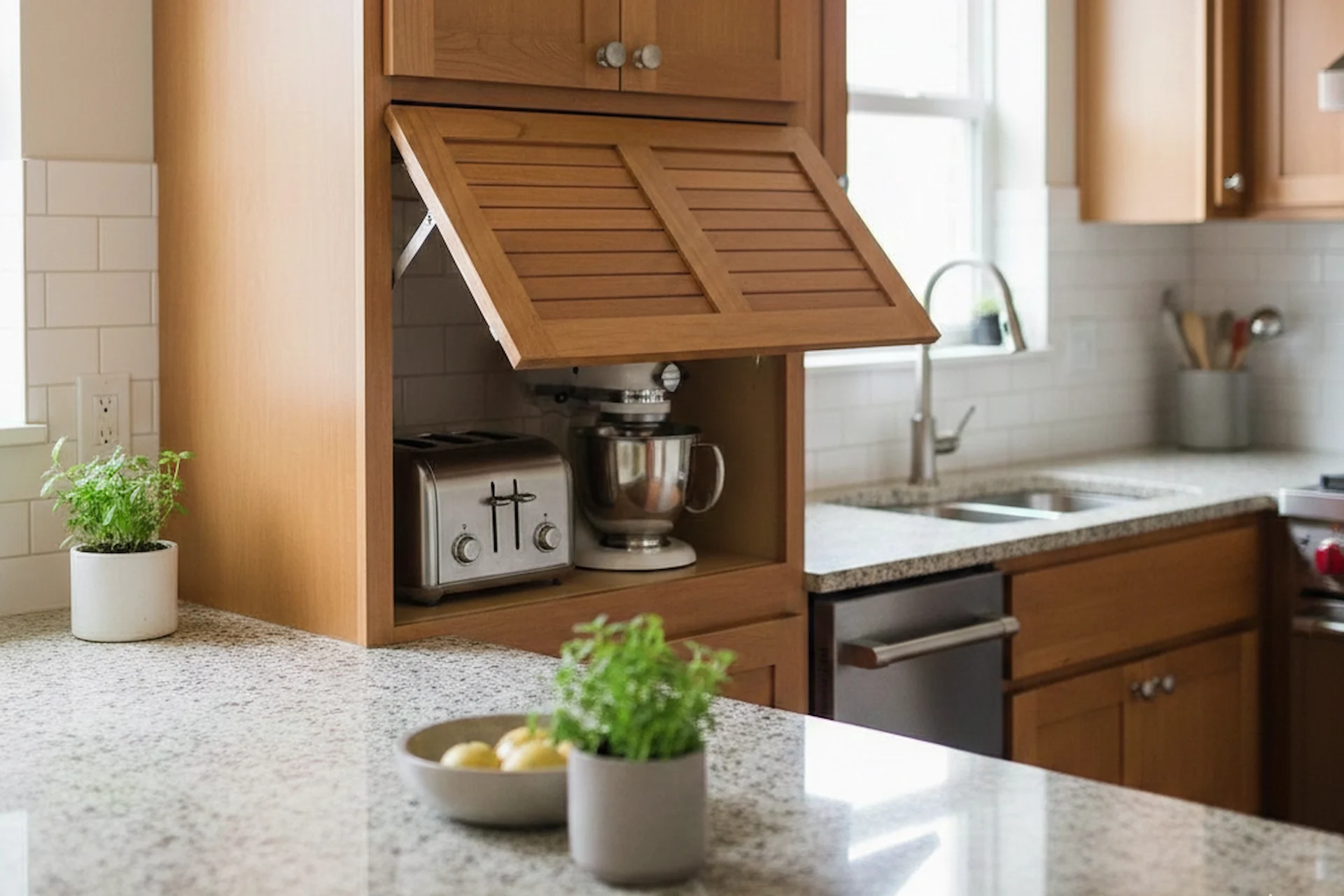
Question: Can Appliance Garages Help Declutter Small Countertops?
Answer: Yes, appliance garages effectively declutter small countertops by concealing items like toasters and blenders behind a door. This frees up valuable workspace and creates a streamlined, organized look while keeping appliances accessible but out of sight.
Do Appliance Garages Solve Small Countertop Clutter?
Small kitchen countertops present a common challenge for homeowners. They quickly become cluttered with essential daily appliances like coffee makers, toasters, blenders, and stand mixers. This clutter reduces valuable workspace for meal preparation. It also creates a visually busy and disorganized environment. Many people seek a solution that keeps these devices accessible without sacrificing precious counter space. But can appliance garages help declutter small countertops? This dedicated storage solution promises to hide your appliances neatly behind a door, directly on your counter.
An appliance garage is essentially a small cabinet that sits on your countertop, designed specifically to house these everyday gadgets. The idea is simple. You conceal the items that cause the most visual clutter while keeping them plugged in and ready for immediate use. This approach differs from stowing appliances in a deep pantry or a low cabinet, which can be inconvenient. We’ll look at how appliance garages work, their benefits, the different types available, and important factors to think about. We will determine if this popular kitchen feature is the right answer to your counter clutter problems and helps create a more organized kitchen.
What Is an Appliance Garage?
An appliance garage is a dedicated storage compartment built onto your countertop. Its primary purpose is to store and conceal small kitchen appliances. Think of it as a built-in cubby or a small cabinet that sits at the back of your counter, often tucked into a corner or placed between upper and lower cabinets. This structure keeps your toaster, coffee machine, or mixer out of sight. It creates a clean, unbroken line across your kitchen surfaces. The front of the garage features a door that allows easy access to the items inside.
These units are designed to integrate with your existing kitchen design. They are frequently made from the same materials as your cabinets for a seamless look. Common door styles include roll-up (tambour) doors, lift-up doors, or traditional swing-out cabinet doors. A key feature is that appliances inside can remain plugged into a nearby outlet, often one installed at the back of the garage itself. This design offers the perfect balance. It provides the tidiness of hidden storage with the convenience of countertop accessibility, directly addressing the core issue of a cluttered but functional kitchen.
Please follow this link to read more about Blue Kitchen Refacing
Related Article: What Are the Best Slimline Appliances for a Small Kitchen?
Related Article: Is a Single-Bowl Sink Better Than a Double-Bowl for Small Counters?
Different Types of Appliance Garages
Appliance garages come in several styles, each offering unique functional and aesthetic qualities. Choosing the right type depends on your kitchen layout, your personal style, and how much space you have available. Some designs save space with their door mechanism, while others focus on blending perfectly with existing cabinetry. Understanding these options helps you select a garage that will effectively help you declutter your small countertop and improve your kitchen’s usability.
-
Roll-Up or Tambour Door
This is a classic design featuring a flexible, slatted door that rolls up into the top of the unit, similar to a traditional breadbox. The primary advantage of a tambour door is that it requires no swing space to open, making it an excellent choice for tight corners or areas with limited clearance. It provides full access to the interior without a door getting in your way. This style works well in both traditional and modern kitchens, offering a unique visual texture. -
Lift-Up Door
A popular choice in modern kitchens, the lift-up door consists of a single panel that lifts vertically. Many models use hardware that allows the door to slide back into the top of the cabinet, holding it securely open. This mechanism offers unobstructed access to your appliances and presents a clean, minimalist appearance when closed. It is important to ensure you have enough vertical clearance above the garage for the door to open fully. -
Swing-Out Cabinet Doors
For a completely seamless look, you can use swing-out doors that perfectly match your surrounding cabinetry. This style makes the appliance garage look like just another part of your upper cabinets. It is a great option for achieving a cohesive kitchen design. The main consideration is that the doors swing outward, so you need adequate space in front of the garage for them to open without hitting anything or blocking a walkway. -
Corner Appliance Garages
Corner garages are specifically designed to fit into the often-underutilized corner of a countertop. These units are typically L-shaped or angled to maximize storage in a tricky spot. Because corners offer more depth, these garages can often hold larger appliances like a stand mixer or a high-performance blender. They are a brilliant solution for transforming an awkward area into a highly functional storage hub, which directly answers the question, “Can appliance garages help declutter small countertops?” by using space wisely.
Before You Install an Appliance Garage
Before you decide to add an appliance garage, there are several practical factors to evaluate. The most critical is space. You must measure the intended location carefully. Note the counter depth, the available width, and the height from the countertop to the bottom of your upper cabinets. Remember that an appliance garage occupies a permanent footprint on your counter. You are trading a small section of counter area to gain a visually clear and more usable prep surface elsewhere. Also, measure your appliances to ensure they will fit inside the garage with enough room for easy removal.
Power access is another essential consideration. For maximum convenience, you need an electrical outlet inside or directly behind the garage. This allows you to keep appliances plugged in and ready to go. If an outlet is not already present, you may need to hire an electrician to install one. Ventilation is also important for certain appliances. Devices that produce heat or steam, like toasters or coffee makers, require adequate airflow. Without it, heat and moisture can build up and potentially damage the garage’s interior or the appliance itself. Some people choose to pull these items forward onto the counter during use.
Conclusion
After examining their function, benefits, and styles, we can provide a clear answer. Yes, appliance garages can help declutter small countertops with remarkable efficiency. They work by consolidating your most-used gadgets into a single, tidy location. This action frees up the rest of your counter for its primary purpose: preparing food. The visual impact is immediate. A kitchen with an appliance garage appears more organized, spacious, and intentional. It replaces the chaotic sight of multiple machines and tangled cords with a clean, uniform cabinet front that elevates the entire room’s aesthetic.
The decision to install an appliance garage involves a strategic trade-off. You dedicate a small, permanent section of your countertop to the storage unit itself. In return, you gain a larger, more flexible, and visually peaceful workspace across the remaining surface. For homeowners who feel overwhelmed by kitchen clutter, this trade is almost always worthwhile. An appliance garage is more than just a box. It is a deliberate design choice that supports a more organized and functional kitchen environment. By carefully considering your space, power needs, and appliance sizes, you can implement a solution that makes your small kitchen feel bigger and work better for you every day.

Blue Malue Get in touch with Blue here.