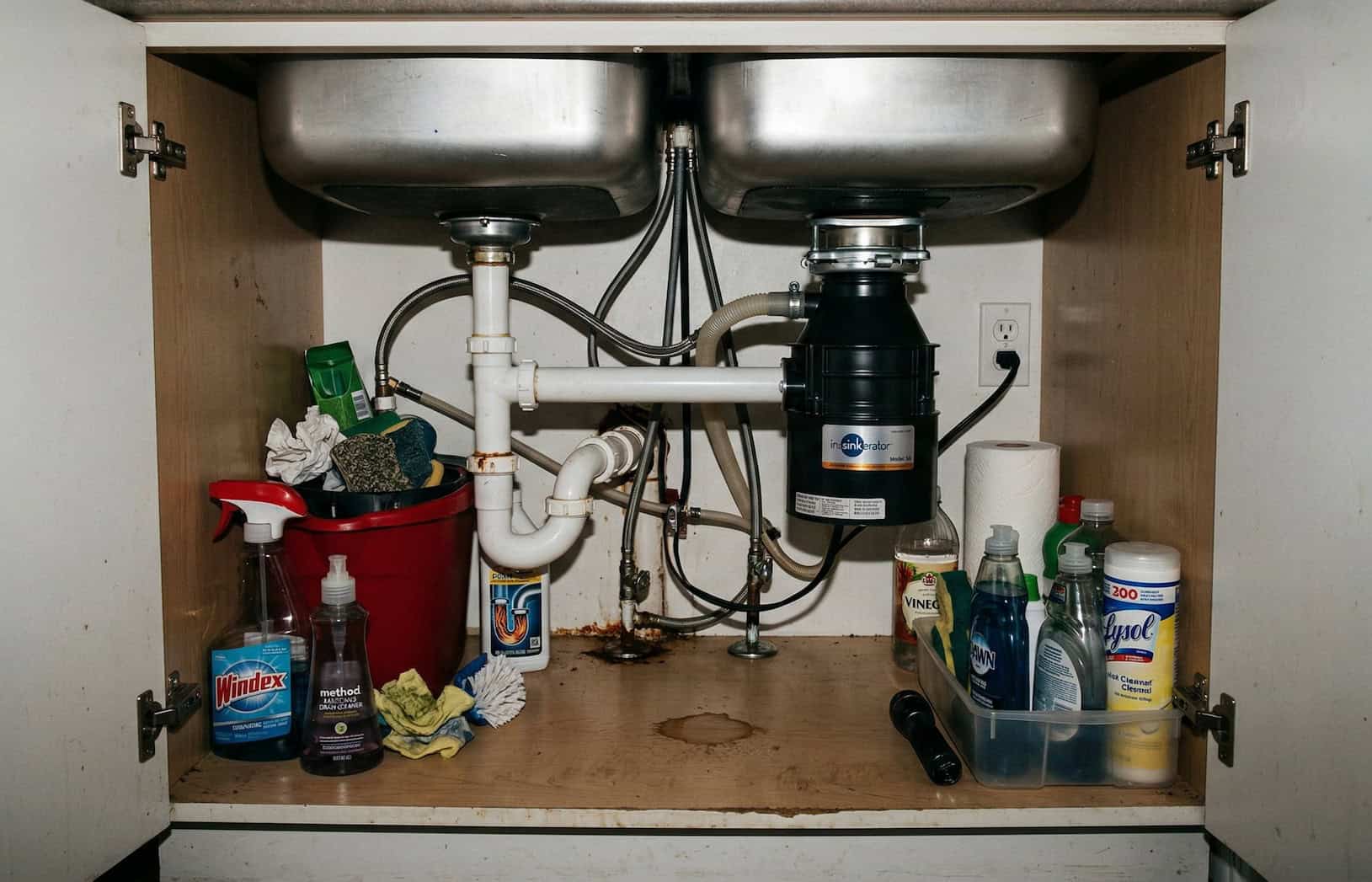
Question: Can Leaking Pipes Under the Sink Destroy Your Cabinet Boxes?
Answer: Yes, leaking pipes under the sink can destroy your cabinet boxes. Constant moisture from a leak will saturate materials like particleboard and wood, causing them to swell, warp, and delaminate. This irreversible damage weakens the cabinet’s structure and often leads to mold growth, completely ruining the box and requiring replacement.
How a Leaky Pipe Can Ruin Your Under-Sink Cabinets
You probably store cleaning supplies, extra sponges, and maybe a small waste bin under your kitchen or bathroom sink. It is a convenient but often neglected space in many homes. You might occasionally notice a small puddle or a slight dampness on the cabinet floor and simply wipe it away. That small, seemingly harmless drip from a plumbing connection, however, is a significant threat to the structure of your cabinetry. Over time, that constant exposure to moisture can cause irreversible damage that compromises the entire unit, leading to expensive repairs and replacements that go far beyond a simple plumbing fix.
Most modern cabinets are constructed from materials like particleboard or medium-density fibreboard (MDF), which are then covered with a laminate or wood veneer. These materials are cost-effective and look great when new, but they have a critical weakness: they absorb water like a sponge. When a pipe leaks, the water soaks into the cabinet box, causing the wood fibres to swell and break down. This process weakens the material from the inside out. So, can leaking pipes under the sink destroy your cabinet boxes? The answer is an emphatic yes. The destruction is often slow and silent, happening out of sight until the damage becomes severe.
The Science Behind Water Damage to Kitchen Cabinets
Understanding why a leak is so destructive requires looking at the materials your cabinets are made from. Particleboard and MDF are engineered wood products created by compressing wood particles, fibres, and resin together under high pressure. This construction method creates a dense and stable panel, but it also creates a material that is highly susceptible to moisture. When water from a leaking pipe comes into contact with an unfinished edge or seeps through a seam, the wood particles immediately begin to absorb the liquid. This absorption causes the material to swell, lose its shape, and delaminate.
The structural integrity of the cabinet relies on the strength of these compressed panels. As they become saturated, the resin holding the wood fibres together starts to fail. The cabinet floor will soften, buckle, and may eventually crumble under its own weight. This process also affects the cabinet’s joints and hardware. Screws holding hinges and drawer slides will lose their grip in the softened material, causing doors to sag and drawers to stick. The protective laminate or veneer surface might resist water for a short time, but moisture eventually finds its way to the substrate, causing bubbling, peeling, and permanent staining. Solid wood cabinets fare slightly better, but they too will warp, crack, and rot with prolonged water exposure.
Click here for more information on kitchen cabinet refacing near me Toronto
Related Article: How Do Seasonal Temperature Changes Impact Cabinet Door Alignment?
Related Article: Should You Use Bumpers to Prevent Cabinet Doors From Slamming?
How Minor Under-Sink Leaks Can Lead to Total Cabinet Replacement
Yes, leaking pipes under the sink can, and often do, completely destroy your cabinet boxes. The destruction is not merely cosmetic; it is a fundamental breakdown of the cabinet’s structure. The process begins when water saturates the cabinet floor, which serves as the foundation of the unit. As the particleboard or MDF swells and weakens, it loses its ability to provide support. The cabinet’s side panels, which are often joined to the base, start to separate as the wood fibres degrade. This structural failure places immense stress on every other component of the cabinet.
The hardware that holds your cabinet together becomes useless. Screws securing the door hinges will strip out of the softened wood, causing doors to hang crookedly or fall off entirely. The box itself can warp so severely that it no longer sits level, creating alignment problems with adjacent cabinets and the countertop. In advanced cases, the cabinet floor can rot through completely, leaving a gaping hole. At this stage, the cabinet is not just damaged; it is destroyed beyond repair. It can no longer perform its basic function of storing items or supporting the sink, and a full replacement becomes the only viable solution to restore safety and function to your kitchen or bathroom.
The Health Risks of Under-Sink Mould
The structural damage to your cabinet is a significant concern, but the secondary effects of a persistent leak can pose a direct risk to your family’s health. The dark, damp, and unventilated space under a sink is an ideal environment for mould and mildew to flourish. These fungi feed on the organic materials found in wood products, like the paper and adhesives in particleboard. As the mould grows, it releases spores into the air. These microscopic spores can easily circulate throughout your home, potentially causing a range of health issues for its occupants.
Exposure to mould spores can trigger allergic reactions in sensitive individuals, with symptoms including sneezing, coughing, red eyes, and skin rashes. For people with asthma, mould can provoke serious attacks and breathing difficulties. Even in healthy individuals, long-term exposure can lead to respiratory problems and other chronic conditions. The musty odour produced by mould is not just unpleasant; it is a clear indicator of active fungal growth. Removing mould from porous materials like saturated particleboard is extremely difficult. Often, the entire cabinet must be carefully removed and disposed of to eliminate the source of the contamination and protect the air quality in your home.
Catching the Problem Early: Warning Signs to Watch For
Preventing a small leak from becoming a major disaster relies on early detection. Regularly inspecting the area under your sinks is a simple habit that can save you significant money and trouble. You do not need to be a plumber to spot the initial signs of a problem. Knowing what to look for allows you to take action before serious damage occurs. Pay close attention to these key indicators during your routine checks.
Visible Water Puddles or Drips
The most obvious sign is visible water. Check all the pipe connections, the faucet base, and the sink drain for active drips. Use a paper towel to wipe down pipes to see if any moisture reappears.Stains and Discolouration
Look for water stains, dark spots, or a chalky white residue on the cabinet floor or back wall. These marks indicate past or present water exposure, even if the area feels dry at the moment.A Persistent Musty Odour
Your nose is a powerful tool for leak detection. A damp, earthy, or musty smell that does not go away is a strong signal of hidden moisture and potential mould growth inside the cabinet.Warped or Swollen Wood
Feel the cabinet floor and panels. Any swelling, bubbling, or areas that feel soft and spongy are clear signs that the wood material has absorbed water and is starting to degrade.Peeling Laminate or Paint
Examine the surfaces and edges of the cabinet. If the laminate covering, paint, or veneer is peeling, blistering, or separating, it means moisture has penetrated the protective outer layer.
Protecting Your Home from Under-Sink Water Damage
A slow leak is a silent agent of destruction, methodically breaking down the materials that form the foundation of your kitchen or bathroom. The damage goes beyond unsightly stains or warped wood; it leads to complete structural failure, turning a sturdy cabinet into a softened, unstable wreck. The constant moisture also invites mould growth, which introduces a serious health hazard into your home and complicates the repair process. Ignoring the first signs of a problem will only lead to more extensive and costly consequences down the road.
Protecting your investment is about being proactive. Make it a habit to check under your sinks at least once a month. Look for the telltale signs of moisture, feel the surfaces for changes in texture, and be alert to any unusual odours. A simple inspection takes only a minute but can catch a problem in its earliest stages. Addressing a loose fitting or replacing a worn seal promptly can prevent hundreds or even thousands of dollars in damage. By staying vigilant, you can ensure your cabinets remain strong, functional, and free from the devastating effects of water damage for years to come, preserving both the value and the health of your home.

Blue Malue Get in touch with Blue here.