Everything About Garbage Disposals
This post tries to explain all about garbage disposals, an appliance found in some modern kitchens. A garbage disposal, also known as a food waste disposer, is a device installed under a kitchen sink between the sink’s drain and the trap. It shreds food waste into small pieces, typically less than 2 mm in diameter, so they can pass through plumbing without causing clogs. This process offers significant convenience by reducing the amount of trash sent to landfills. It also helps keep your kitchen cleaner by eliminating food scrap odours from your garbage bin.
Garbage disposals streamline the cleanup process after meals. You simply push food scraps into the sink drain, turn on the water, and activate the unit. The appliance quickly grinds the waste and flushes it away into your home’s wastewater system. Understanding how these units function, the different types available, and how to maintain them is key to their longevity and performance. This article provides essential information on selecting, using, and caring for your garbage disposal to ensure it operates efficiently for years. We will cover the mechanics, models, and maintenance practices that every homeowner should know.
How a Garbage Disposal Works
Many people believe garbage disposals use sharp blades to chop up food waste. This is a common misconception. Instead of blades, the appliance uses a spinning plate with small metal impellers, or lugs, mounted on it. When you turn the unit on, a motor spins this plate at high speed. Centrifugal force pushes the food waste against a stationary grind ring that surrounds the spinning plate. This grind ring has sharp edges that work like a cheese grater, shredding the food scraps into very fine particles.
Cold water is essential for this process. You must run a steady stream of cold water while the disposal is active. The water helps to liquefy the food waste, allowing the small particles to be easily flushed through your plumbing system and into the sewer or septic tank. Cold water also helps to solidify any fats or grease, so they can be chopped up and washed away with the other food particles. Using hot water can melt grease, which may then coat and clog your pipes as it cools further down the line. The combination of grinding and water flow makes the disposal an effective tool for managing kitchen food scraps.
Click here to read more about Blue Kitchen Refacing
Related Article: How Long Do Garbage Disposals Usually Last?
Choosing the Right Garbage Disposal
Selecting the ideal garbage disposal requires you to evaluate a few key features. The right unit for your home will depend on your family size, cooking frequency, and plumbing system. A thoughtful choice ensures your disposal handles your needs efficiently and lasts for a long time. Consider the motor size, the material of the grinding components, and the unit’s noise level before making a purchase. Each of these elements directly impacts the performance and durability of the appliance.
Your sink’s material and your home’s plumbing also play a role. Heavier, more powerful disposals create more vibration and may not be suitable for less sturdy sinks, like some stainless steel models. Additionally, if your home uses a septic system, you should look for a disposal that is specifically rated as septic-safe. These models often use more advanced grinding technology or inject helpful microorganisms to assist with waste breakdown in the tank.
-
Motor Size and Power
The horsepower (HP) of the motor determines the disposal’s grinding power. A 1/3 to 1/2 HP motor is adequate for singles or small families who cook infrequently. A 3/4 HP motor is a great middle-ground option for a typical family, handling most food scraps with ease. For large families or those who cook often, a 1 HP or higher motor provides the power to grind tougher items like small bones and fibrous vegetables without jamming. -
Grind Chamber Materials
The longevity of a garbage disposal often depends on the materials used in its grind chamber. Models with galvanized steel components are more affordable but are also more prone to rust and corrosion over time. For superior durability, choose a disposal with stainless steel grind components. Stainless steel resists corrosion and provides a longer service life, making it a worthwhile investment for most households. -
Noise Levels and Features
Garbage disposals can be loud. If kitchen noise is a concern for you, look for models with advanced insulation and anti-vibration technology. Manufacturers often label these as “quiet” or “sound-reducing” models. They use insulated shells and special mounting components to dampen the noise and vibration from the motor, resulting in a much quieter operation that will not disrupt conversations in your home.
Related Article: Should I Get a 1/2 or 3/4 Hp Garbage Disposal?
Related Article: Should You Put Eggshells in the Garbage Disposal?
Proper Garbage Disposal Use and Maintenance
Correct use and regular maintenance will extend the life of your garbage disposal and prevent clogs. Always run a strong flow of cold water before, during, and for about 15 seconds after you finish grinding. This helps flush the food particles completely through the pipes. Cut large food scraps into smaller pieces before putting them into the disposal. This makes the grinding process easier on the motor and reduces the risk of jams. Feeding the waste in slowly also prevents the unit from becoming overloaded.
Cleaning your disposal regularly is important to prevent odours and buildup. A simple method is to grind a few ice cubes along with some citrus peels, like lemon or orange. The ice helps scour the inside of the grind chamber, while the citrus oils provide a fresh scent. For a deeper clean, you can pour a half cup of baking soda into the disposal, followed by a cup of white vinegar. Let the mixture foam for about ten minutes, then flush it with cold water while the disposal runs for a few seconds.
What to Avoid Putting in Your Disposal
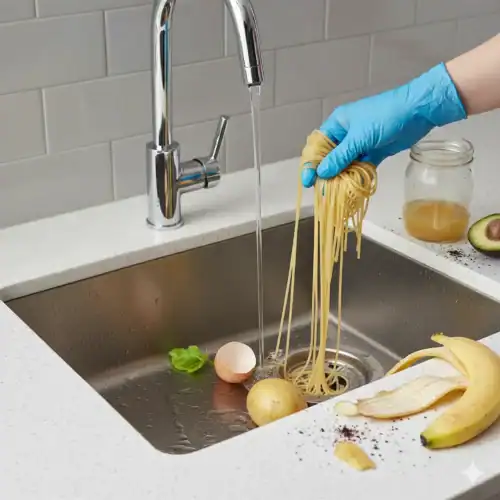
Knowing what not to grind is just as important as knowing what you can. Certain items can damage the unit or clog your plumbing. Never pour grease, oil, or fat into your disposal. These substances can solidify in your pipes and cause serious blockages. Avoid fibrous foods like celery stalks, corn husks, and artichokes, as their stringy fibres can wrap around the impellers. Starchy, expandable foods such as pasta, rice, and potato peels can create a paste-like substance that clogs drains. Finally, do not put hard materials like bones, fruit pits, or seafood shells into your disposal unless you have a high-horsepower model designed to handle them.
Related Article: Can You Pour Vinegar in a Garbage Disposal?
Related Article: Why Don’t Plumbers Like Garbage Disposals?
Common Problems and Simple Solutions
Even with proper care, you might encounter issues with your garbage disposal. Many common problems have simple solutions that you can handle without calling a plumber. Understanding how to troubleshoot these issues saves you time and money. The most frequent problems include jams, clogs, and a unit that fails to turn on. Always disconnect the power to the disposal at the circuit breaker before attempting any repairs to ensure your safety.
If the disposal hums but does not spin, it is likely jammed. After turning off the power, use a flashlight to look into the chamber for a foreign object. You can use pliers or tongs to remove it. If you cannot see an obstruction, insert the small wrenchette (a special Allen key) that came with your unit into the slot on the bottom of the disposal. Turn it back and forth to free the motor. Once clear, press the red or black reset button on the bottom of the unit and restore power. This usually resolves the issue.
-
The Disposal Will Not Turn On
If your disposal is completely silent and shows no signs of power, the first step is to check the reset button. This small button, usually red or black, is located on the bottom of the unit. It can trip if the motor overheats or gets jammed. Press it firmly to reset it. If that does not work, check your home’s main circuit breaker panel to see if the switch for the disposal has been tripped. -
Leaks Under the Sink
Leaks can occur in several places. If water drips from the top of the unit, the sink flange connection is likely the problem. You may need to tighten the mounting screws or re-seal the flange with plumber’s putty. A leak from the side of the disposal often points to a loose dishwasher hose connection. A leak from the bottom of the unit usually indicates a failed internal seal, which means you will probably need to replace the entire disposal.
Conclusion
A garbage disposal is more than just a convenience; it is a practical tool that promotes a cleaner and more efficient kitchen environment. By grinding food scraps and sending them into the wastewater system, it drastically reduces the amount of organic waste in your trash can. This means fewer unpleasant odours, fewer pests attracted to your garbage, and fewer trips to take out the trash. The appliance also contributes positively to the environment by diverting food waste from landfills, where it would otherwise decompose and produce methane, a potent greenhouse gas.
Investing in the right garbage disposal and committing to its proper care gives you a reliable kitchen assistant for many years. We have explored all about garbage disposals, from how they operate using impellers instead of blades to the key differences between continuous and batch feed models. By considering factors like motor power and material quality, you can choose a unit that perfectly matches your household’s demands. Regular maintenance and knowing how to troubleshoot minor issues will ensure your disposal remains a valuable asset. A well-chosen, well-cared-for garbage disposal simplifies your daily cleanup and supports a more hygienic home.
Related Articles









Blue Malue Get in touch with Blue here.