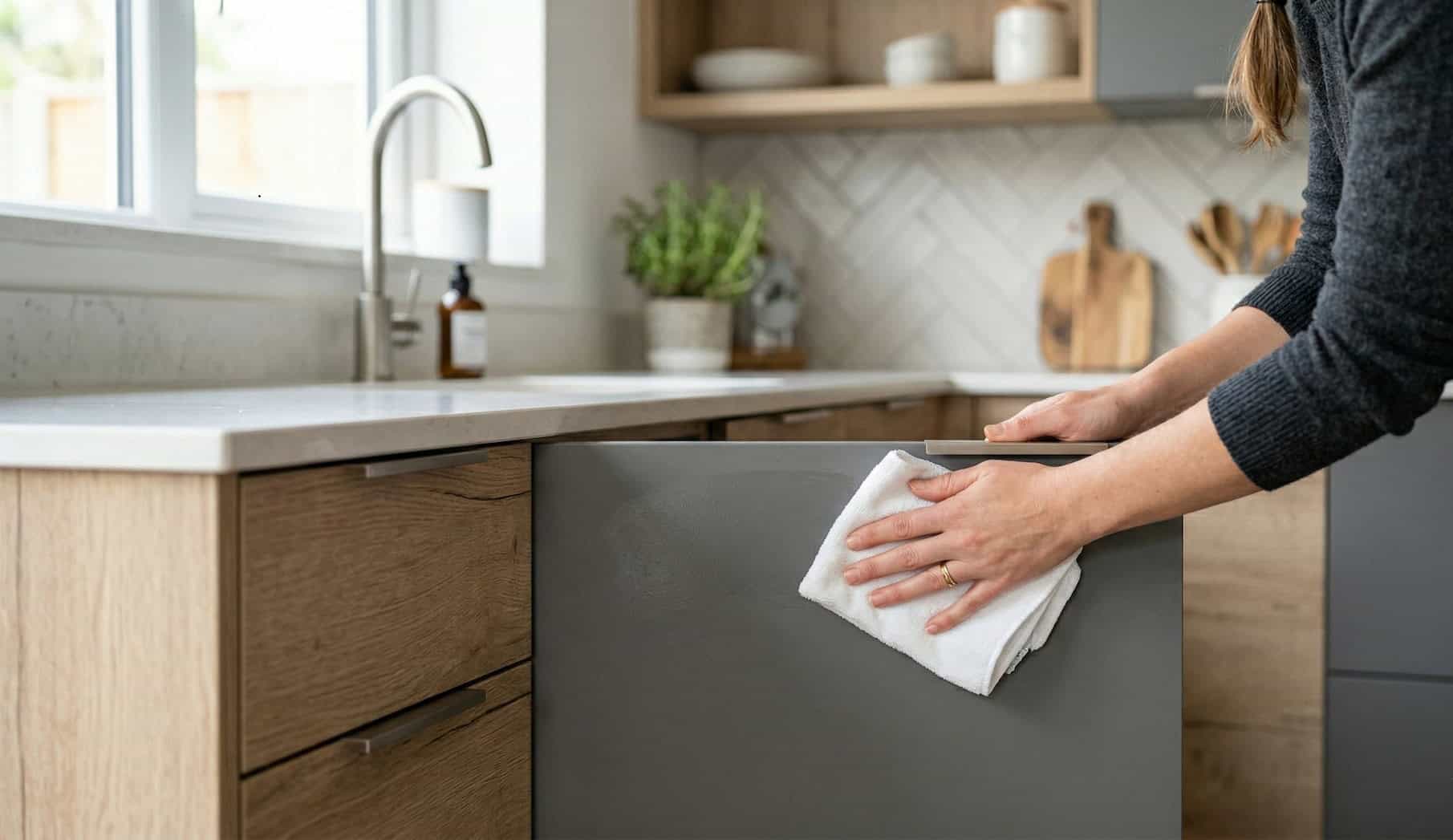
Question: Is It Safe to Use Furniture Polish on Modern Cabinet Laminates?
Answer: It is not recommended that you use furniture polish on modern kitchen cabinets. Furniture polish can leave a waxy, streaky residue on the non-porous surface, which attracts dust and is difficult to remove. A simple solution of mild soap and water is the safest and most effective method for cleaning laminate cabinets.
Should You Use Furniture Polish on Your Laminate Kitchen Cabinets?
You may look at your modern kitchen cabinets and wonder how to restore that fresh-from-the-showroom lustre. You might see a bottle of furniture polish under the sink and think it is the perfect solution for adding shine. After all, polish makes wood furniture look fantastic, so it should work on cabinets too, right? The answer, however, is not as straightforward as you might think because modern cabinet materials are very different from traditional solid wood.
Modern cabinet laminates are advanced, durable surfaces engineered for busy homes. Their construction and finish are specifically designed to resist stains and wear without needing extra coatings. Using a product intended for porous wood on a non-porous synthetic surface can create unexpected problems. Instead of enhancing the appearance of your cabinets, you could accidentally cause a buildup of residue that dulls the finish and attracts dust. Understanding the nature of your cabinet material is the first step in providing the best care.
Understanding Modern Cabinet Laminates
To properly care for your cabinets, you first need to understand what they are made of. Modern cabinet laminate is not a single material but a composite product. It consists of several layers fused together under high heat and pressure. The core is typically made from medium-density fibreboard (MDF) or particleboard, providing structure and stability. On top of this core, a thin layer of paper is applied. This paper contains a high-resolution printed image that gives the cabinet its specific look, whether it is a solid colour, a pattern, or a convincing wood grain effect. This design layer is what defines the cabinet’s style.
The most important layer for cleaning and maintenance is the final, topmost one. This is a clear, protective wear layer made from a tough resin. This transparent topcoat acts as a durable shield. It protects the printed design layer from scratches, impacts, moisture, and fading from sunlight. Unlike solid wood, which is porous and can absorb oils and waxes, this protective laminate surface is completely non-porous. It is a sealed barrier. This fundamental difference is why cleaning methods for wood and laminate are not interchangeable. The goal with laminate is to clean this protective layer, not to treat it like a piece of raw wood.
Click this link to read more about Blue Kitchen Refacing
Related Article: How Does Kitchen Humidity Affect the Lifespan of Your Cabinets?
Related Article: What Household Chemicals Should You Never Use on Kitchen Cabinetry?
Is It Safe to Use Furniture Polish on Modern Cabinet Laminates?
After considering how laminate is constructed and how polish works, we can directly answer the central question. As a general rule, it is not safe or effective to use conventional furniture polish on modern cabinet laminates. The practice is not recommended by most cabinet manufacturers because the potential for negative consequences is high. The oils and silicones in polish do not nourish the laminate surface; they simply coat it with a residue that compromises its appearance and cleanliness. This buildup creates a frustrating cycle where the cabinets look dirty soon after cleaning, prompting you to apply more polish and worsen the problem.
The temporary shine you achieve is not worth the long-term, dulling buildup. The safest approach is to avoid these products entirely. You get a much better and more lasting result by using cleaning methods appropriate for a non-porous, sealed surface. The goal is to remove dirt and grease from the protective topcoat, not to add a new, artificial layer. By sticking to simple and correct cleaning techniques, you preserve the original factory finish and ensure your cabinets look their best for many years without any sticky, hazy residue ruining their appearance.
The Proper Method for Cleaning Laminate Cabinets
Maintaining the beauty of your laminate cabinets is simple and does not require any specialized polishes. An effective routine relies on gentle methods and common household items. Following a consistent process will keep your surfaces looking clean and new without risking damage or buildup. This approach focuses on removing grime from the surface rather than trying to add an artificial shine. Here is a proven method for safe and effective cleaning.
Step 1: Regular Dusting
Start by regularly dusting your cabinets with a clean, dry microfibre cloth. This simple action prevents dust and other airborne particles from accumulating on the surface. Abrasive dust can cause fine scratches over time if it is ground in during cleaning, so removing it first is a key preventative step.
Step 2: Use a Gentle Cleaning Solution
For routine cleaning of fingerprints, smudges, and light kitchen grime, a mild solution is all you need. Mix a teaspoon of gentle dish soap into a litre of warm water. Dip a soft microfibre cloth into the solution and then wring it out thoroughly until it is just damp, not dripping wet. Excess water can get into the seams of cabinet doors and cause swelling of the core material.
Step 3: Wipe and Dry Immediately
Wipe the cabinet surfaces gently with the damp cloth, working from top to bottom. Following the wipe-down, immediately use a second, clean and dry microfibre cloth to buff the surface dry. This final step is critical. It prevents water spots and streaks from forming, leaving behind nothing but a clean, clear finish that reflects the cabinet’s original lustre.
Tackling Tough Stains and Buildup on Laminate
Sometimes, your laminate cabinets will need more than a simple wipe-down. Stubborn grease splatters from cooking, sticky fingerprints, or other dried-on food messes require a bit more cleaning power. Even in these cases, you should still avoid harsh commercial cleaners and polishes. Instead, you can turn to slightly stronger but still safe household solutions. It is always a good idea to test any new cleaning method on a small, hidden spot first, like the inside of a cabinet door, to ensure it does not affect the finish.
For greasy or oily residue, a 50/50 solution of white vinegar and warm water is very effective. The mild acidity of the vinegar cuts through grease without harming the laminate’s protective layer. Apply it with a soft cloth, wipe the area clean, and then rinse with a cloth dampened with plain water. Be sure to dry the surface completely afterward. For more stubborn, stuck-on grime, you can create a paste using baking soda and water. Apply the paste to the spot with a soft cloth or sponge and let it sit for a few minutes. Gently rub the area, then wipe away the paste and residue with a clean, damp cloth before drying thoroughly.
Preserving the Finish of Your Laminate Cabinets
The best strategy for keeping your modern laminate cabinets in pristine condition is prevention and proper care. This means avoiding products that are not designed for them. Traditional furniture polishes create a greasy buildup that attracts dirt and dulls the very finish you are trying to enhance. Instead of adding a temporary and problematic shine, your focus should be on maintaining the integrity of the cabinet’s original, durable topcoat. This is achieved with gentle and consistent cleaning.
A simple routine of dusting and wiping with a mild soap and water solution is the most effective way to care for your cabinets. For tougher spots, a vinegar solution or baking soda paste provides more cleaning power without the risk of damage or residue. Always remember to use a damp, not wet, cloth and to dry the surface immediately to prevent moisture damage and streaking. By following these simple guidelines, you protect your investment. You ensure your kitchen or bathroom cabinets retain their intended colour and lustre for years, free from the sticky, hazy film that polishes can leave behind. Correct care is simple, inexpensive, and yields the best long-term results.

Blue Malue Get in touch with Blue here.