Everything About Small Kitchens
Many homeowners believe a small kitchen limits their culinary potential and design aspirations. However, a compact kitchen presents a unique opportunity for creativity and efficiency. With thoughtful planning, you can transform a small space into a highly functional and beautiful hub for your home. This article explores small kitchens, offering practical strategies to maximize every square metre. We will cover smart layouts, innovative storage solutions, and design techniques that create an illusion of space.
A well-designed small kitchen prioritizes workflow and eliminates clutter. Every element must have a purpose, from the placement of appliances to the choice of cabinet hardware. We will show you how to choose compact appliances that deliver full-sized performance and how to use colour and light to make the room feel open and airy. By applying these principles, you can create a kitchen that feels spacious, organized, and perfectly suited to your lifestyle.
Smart Layouts for Compact Kitchens
The layout forms the foundation of any functional kitchen. In a small space, the right layout is critical for creating an efficient workflow and maximizing usability. You should choose a layout that suits the room’s dimensions and your daily routines. Three classic layouts work exceptionally well for small kitchens, each offering distinct advantages. These designs focus on the “kitchen work triangle,” an imaginary line connecting the sink, refrigerator, and stove, which helps streamline cooking tasks.
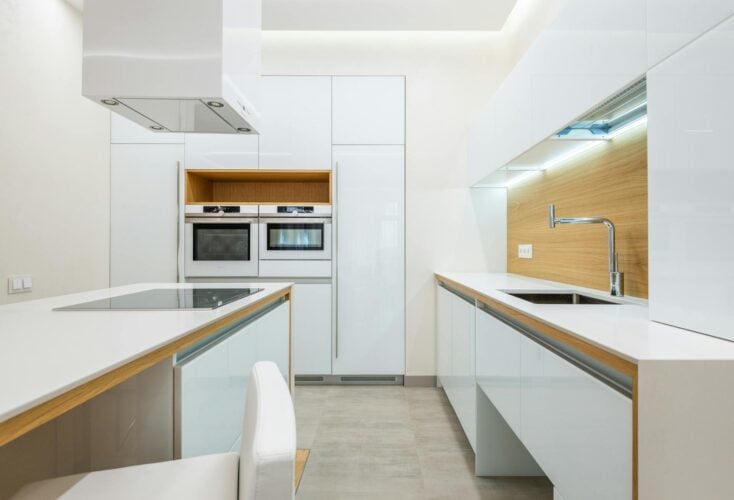
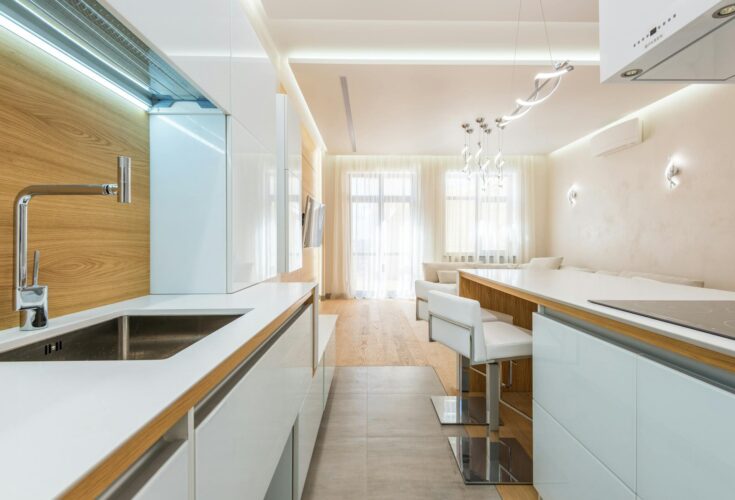
The galley layout, featuring two parallel counters, is a popular choice for narrow rooms. This design creates a highly efficient corridor for cooking, with everything within easy reach. The one-wall kitchen is another excellent solution, especially for studio apartments or open-plan living spaces. It lines up all cabinets, appliances, and counters along a single wall, saving significant floor space. An L-shaped layout uses two adjacent walls, which opens up the room and provides a good amount of counter space. This option can also accommodate a small dining nook in the opposite corner.
Click for more information about cabinet refinishing in Toronto
Related Article: How Can You Make a Tiny Kitchen Feel Twice as Large?
Related Article: What Are the Best Cabinet Door Styles for Cramped Kitchens?
Choosing the Right Appliances
Selecting the right appliances is a crucial step when you are learning all about small kitchens. Standard-sized appliances can dominate a compact room, leaving little space for counters and storage. Thankfully, many manufacturers now offer a wide range of compact and slimline appliances that provide excellent performance without the large footprint. Before you shop, carefully measure your available space to ensure a perfect fit.
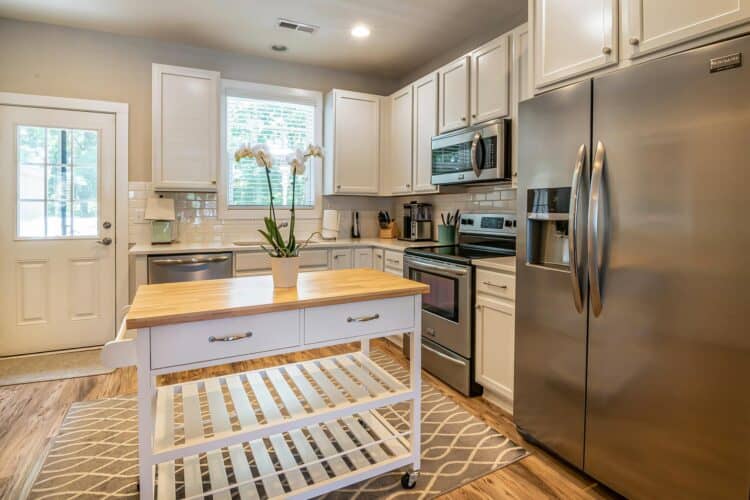
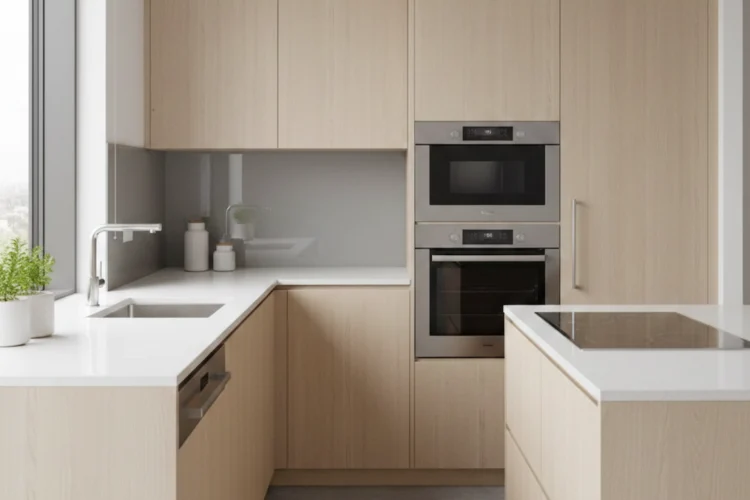
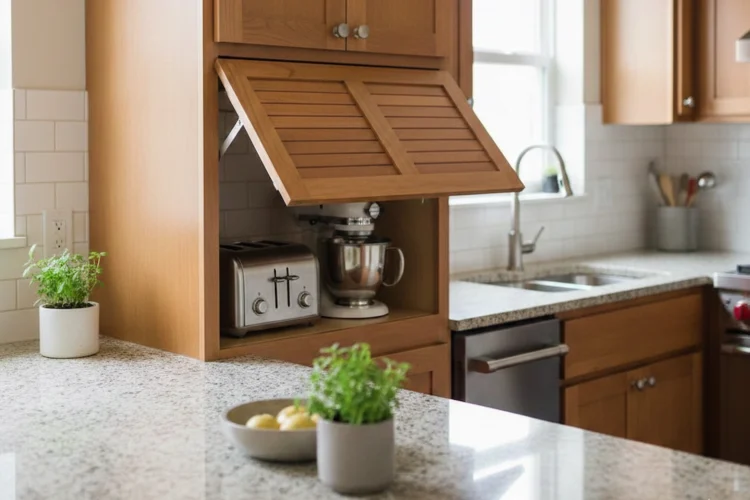
Consider appliances that serve multiple functions. A combination microwave oven, for example, can bake, grill, and microwave, saving you from needing three separate devices. A slimline dishwasher, often just 45 centimetres wide, can fit into tight spaces while still handling daily dishwashing needs. For refrigeration, look for counter-depth or apartment-sized models. These units are shallower than standard refrigerators, so they sit flush with your cabinetry and do not jut out into the walkway. Integrated appliances that hide behind cabinet panels also create a clean, uncluttered look that helps a small kitchen feel more spacious.
Related Article: Should You Use Open Shelving in a Small Kitchen Layout?
Related Article: How Can You Utilize the Dead Space Above Your Cabinets?
The Impact of Colour and Lighting
Visual elements like colour and lighting have a profound effect on the perception of space. In a small kitchen, these design choices can make the difference between a room that feels cramped and one that feels bright and welcoming. A strategic approach to your colour palette and lighting plan can visually expand your kitchen, making it seem larger than it is. These techniques trick the eye and create a more comfortable and pleasant atmosphere.
Light Colour Palettes
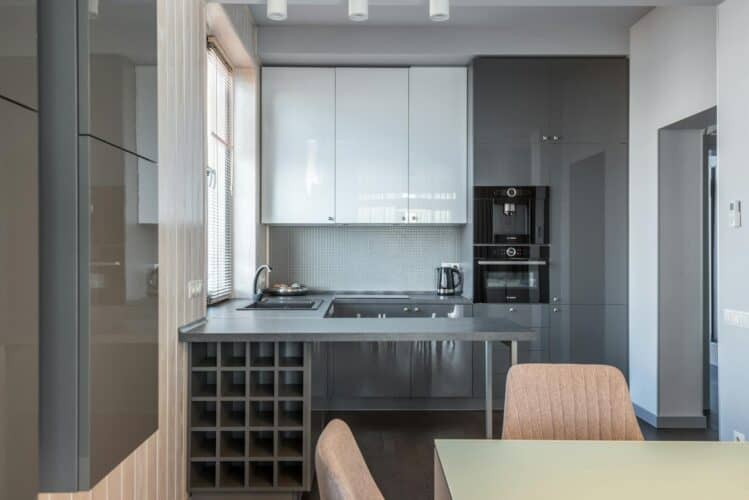
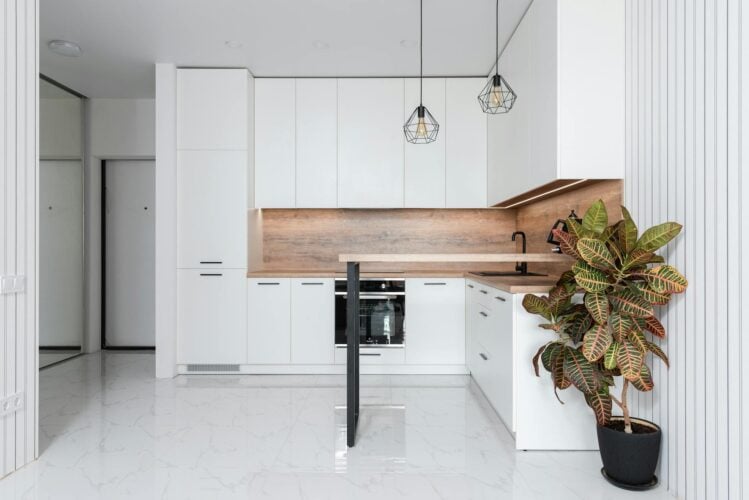
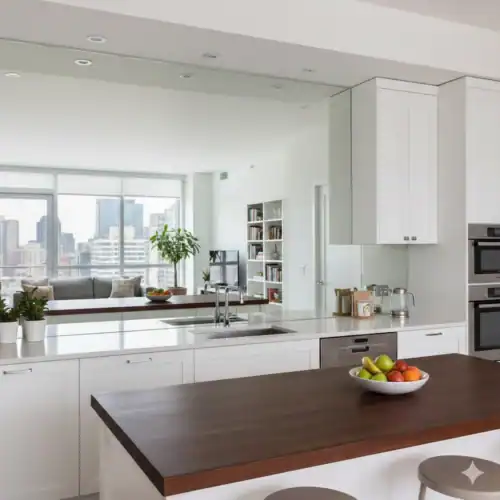
Light colours are your best friend in a small kitchen. Hues like white, cream, pale grey, and soft pastels reflect light, which makes the space feel more open and airy. A monochromatic colour scheme, where you use different shades and tints of a single colour, can create a cohesive and expansive feel. You can paint the walls, cabinets, and ceiling in similar light shades to blur the boundaries of the room. If you want to add some visual interest, you can introduce a pop of colour through a backsplash, accessories, or a single feature wall. Glossy finishes on cabinets or tiles also help bounce light around the room.
Effective Lighting Schemes
Good lighting is essential in any kitchen, but it is especially important in a small one. A well-lit space feels larger and more functional. Relying on a single overhead fixture can create shadows and make the room feel dim. Instead, use a layered lighting approach.
-
Ambient Lighting
This is the main source of light. A flush-mount ceiling fixture or recessed lights provide good overall illumination without taking up visual space. -
Task Lighting
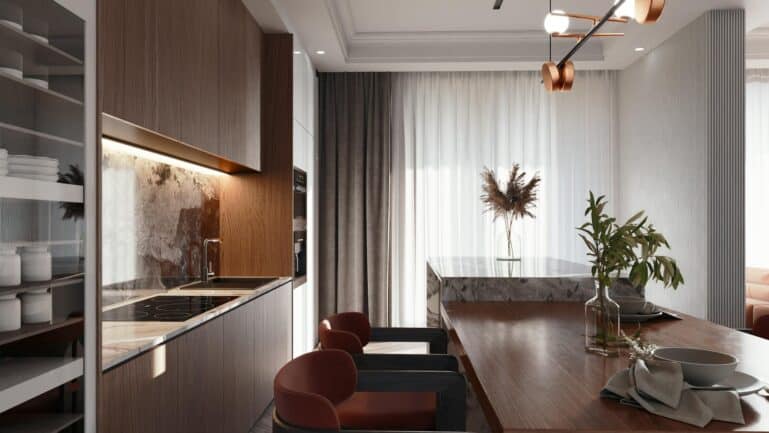
Install under-cabinet LED strips to light up your countertops. This makes food preparation safer and easier. Pendant lights over a small island or sink can also add focused light. -
Accent Lighting
Use accent lighting to highlight specific features. You can place small lights inside glass-front cabinets to showcase your favourite dishes, which adds depth and a touch of elegance.
Design Principles for Small Kitchens
Several core principles guide the design of a functional and beautiful small kitchen. These concepts tie together all the elements, from layout to lighting, into a cohesive whole. By keeping these ideas in mind, you can make informed decisions that enhance both the look and usability of your space. The main goals are to simplify, streamline, and create a sense of order. This approach ensures your kitchen works hard for you every day.
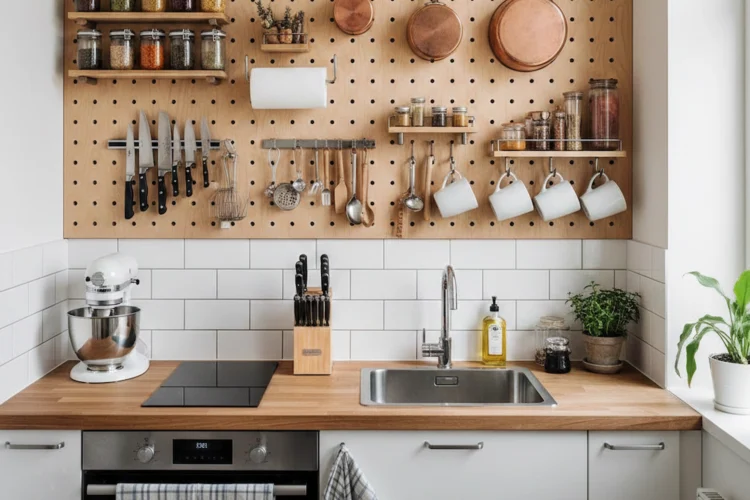
Embrace minimalism by reducing clutter and keeping only the essentials. A minimalist aesthetic naturally suits small spaces because it focuses on clean lines and uncluttered surfaces. Choose multi-functional items whenever possible. A small kitchen island can serve as a prep area, a dining spot, and a storage unit. A cutting board designed to fit over your sink instantly adds extra counter space. Finally, create clear zones for different activities. Designate specific areas for preparing food, cooking, and cleaning. This organization improves workflow and makes the kitchen feel more manageable and efficient.
Related Article: Is a Hidden Pantry Possible in a Small Kitchen Footprint?
Related Article: How Do Pull-Out Spice Racks Save Counter Space?
Creating a Functional and Beautiful Small Kitchen
A small kitchen does not have to be a limitation. With a clear plan and smart design choices, it can become one of the most efficient and inviting rooms in your home. The information we have covered provides a solid foundation for your project. By focusing on an effective layout, you create a natural flow for your daily tasks. Innovative storage solutions help you keep the space organized and clutter-free, which is essential for maintaining a sense of openness. Every decision contributes to the final result.
Choosing compact, multi-functional appliances frees up valuable counter and cabinet space. A light colour palette paired with a layered lighting scheme will make your kitchen feel bright and spacious. Remember the key design principles of minimalism and functionality to guide your choices. This article on all about small kitchens shows you that size is not the most important factor. Thoughtful design and clever solutions are what truly define a great kitchen. You can create a beautiful, practical space that perfectly meets your needs and enhances your home.
Related Articles








Blue Malue Get in touch with Blue here.